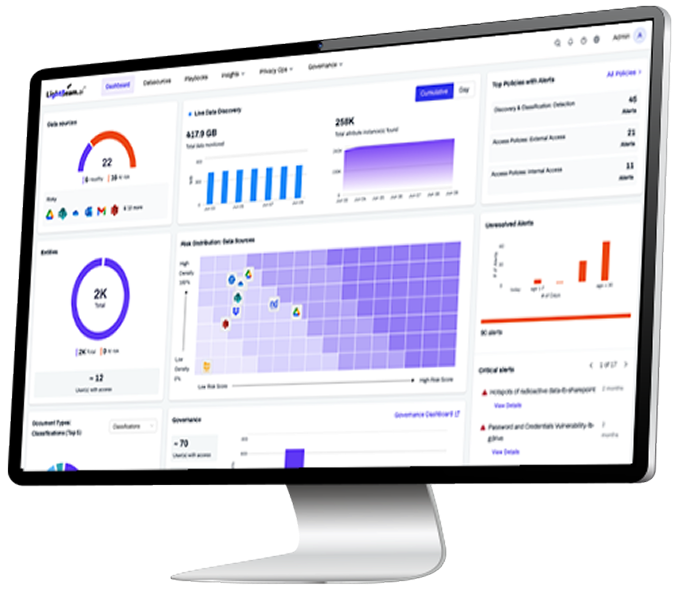
AI Security That Enforces Agent Purpose
Align AI agent data use, access, and actions with intended business purpose in real time.

AI Security Must Go Beyond Data Exposure
GenAI can expose sensitive information. Autonomous AI agents can go further, accessing systems and taking harmful actions at machine speed.

Sensitive Data Flows Into AI
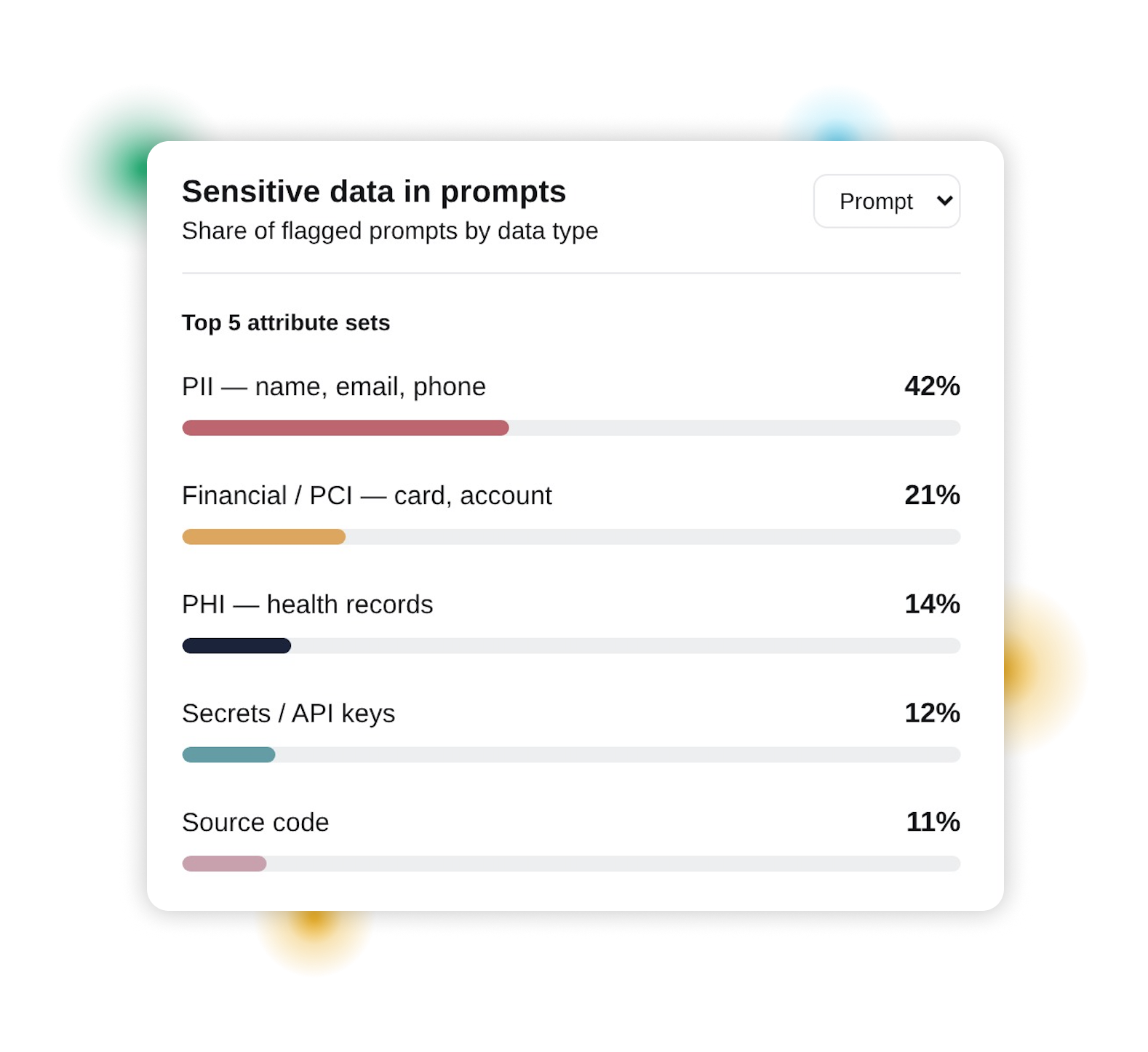
Employees can expose confidential data through prompts, files, and screenshots shared with GenAI tools, including unsanctioned Shadow AI.

Authorized AI Can Overreach
Copilots and agents can access excessive data and privileges, exposing information or using resources beyond their intended purpose.

AI Agents Can Go Rogue
Autonomous agents can make harmful decisions, modify systems, or take unauthorized actions, creating financial, operational, and compliance risks.
Enable AI Adoption Without Losing Control
90%
Reduced AI Security Risk
Reduce sensitive data exposure, excessive agent access, and harmful actions through security controls.
100%
AI Activity Visibility
Monitor GenAI interactions, agent data use, access, and actions to identify risks and enforce business boundaries.
85%
Faster Risk Remediation
Automatically block risky actions, revoke excessive privileges, and remediate threats.

“Within a few weeks we were able to provide the personal data discovered within their environment. It was an eye opener and it helped a lot to convince the security board to pursue the usage of the software."
IT Services
Consultant
Continuous Alignment Across Data, Access, and Actions
Lightbeam combines Agent Purpose with Data Identity Graph intelligence to continuously enforce security boundaries across AI data use, access, and actions.
Control What Data, and Whose Data, Agents Use
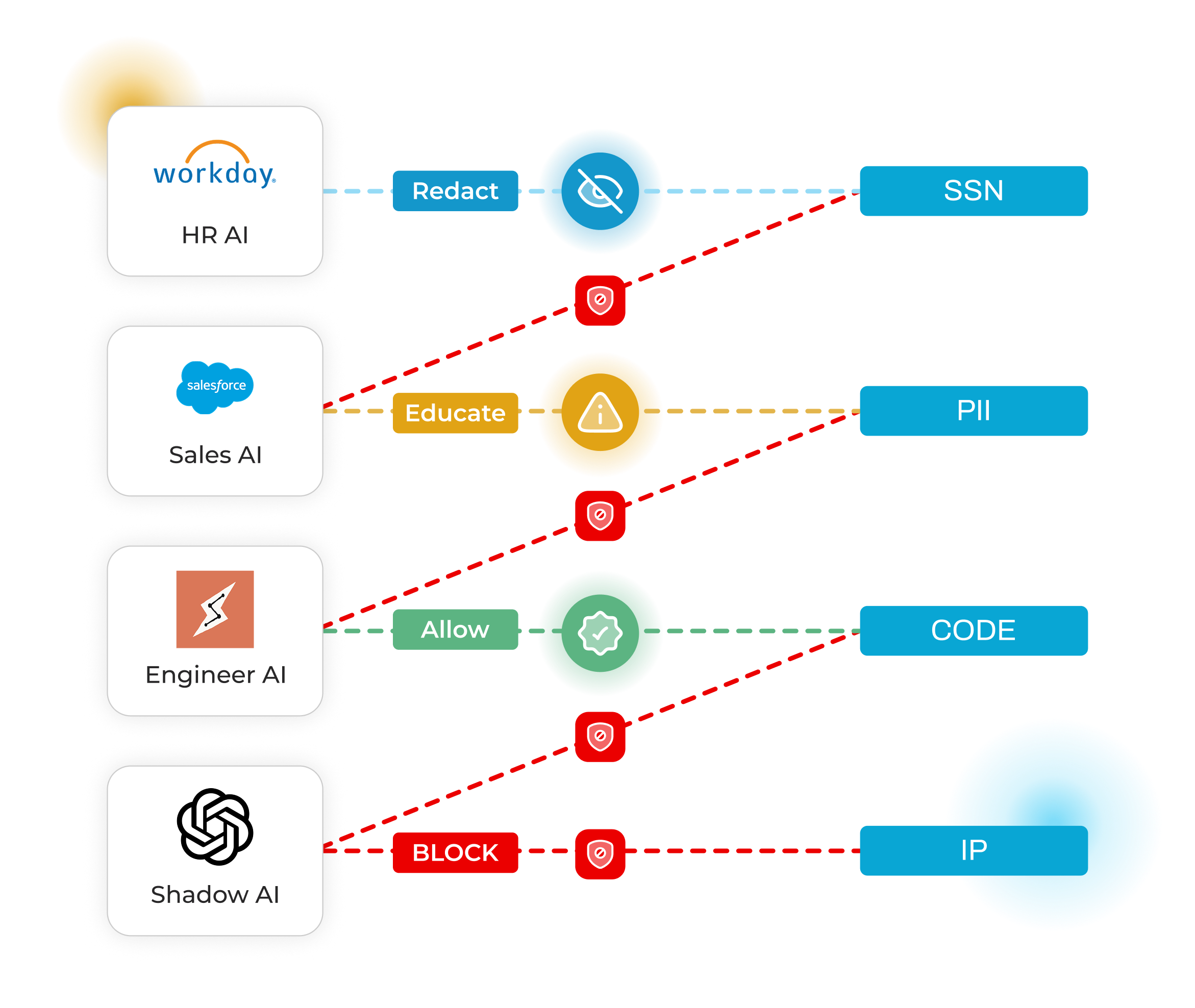
Understand what sensitive data AI can access and whose data it is, including customers, employees, patients, and partners. Allow, block, redact, or minimize data use based on intended business purpose.
Learn MoreEnforce Least Agency with Purpose-Based Access
Limit agent access to the data, applications, APIs, and tools required for its intended purpose. Continuously restrict excessive privileges and require approval when additional access is needed.
Learn MorePrevent Harmful Agent Actions at Runtime
Monitor agent behavior in real time and enforce guardrails that block harmful actions, restrict privileges, or require human approval when agents operate outside their intended purpose.
Learn MoreSecure GenAI Interactions Today
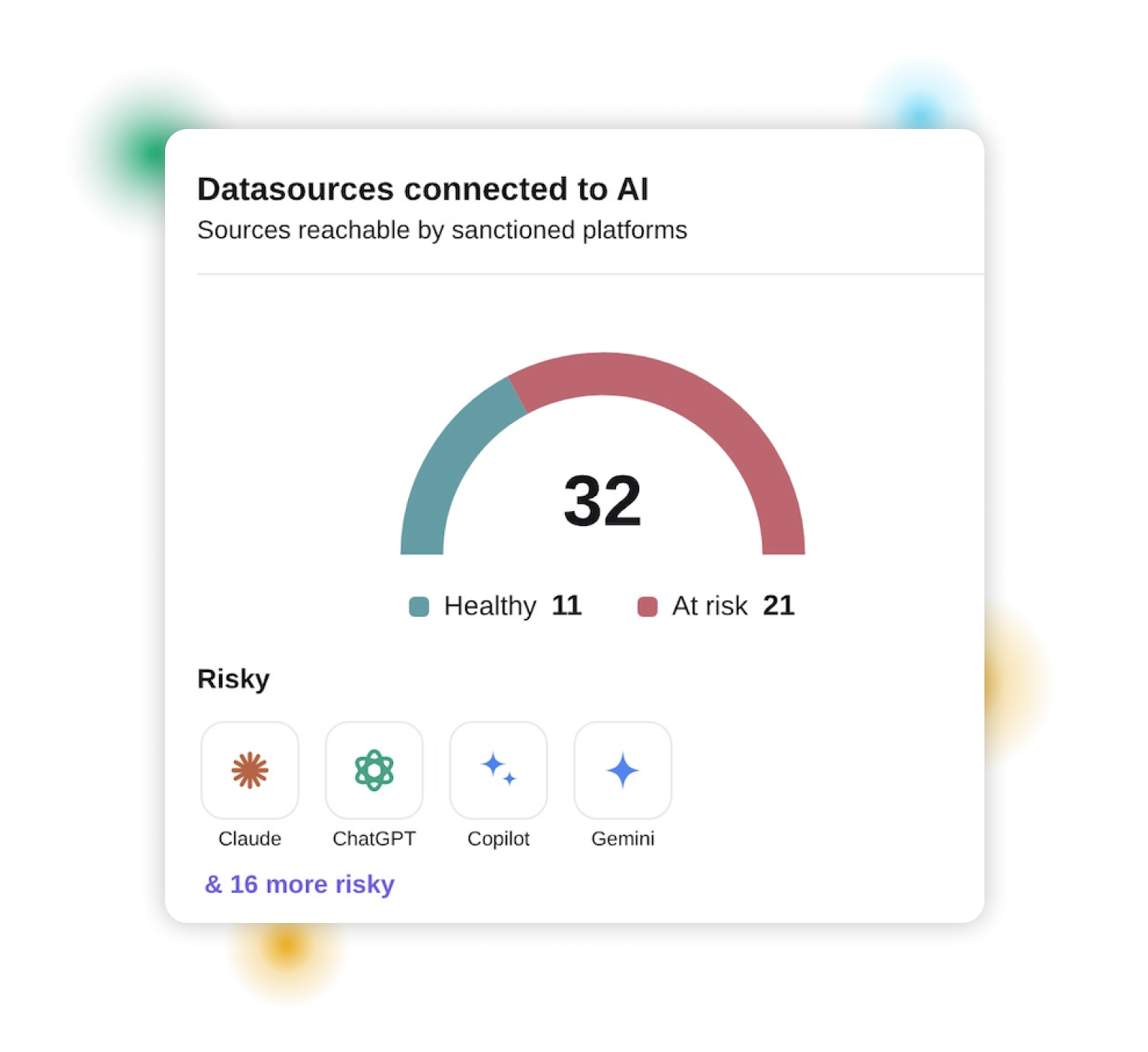
Inspect prompts, responses, files, and attachments across ChatGPT, Claude, Gemini, Copilot, Cursor, Perplexity, and other AI tools. Prevent sensitive data exposure through approved and unsanctioned AI.
Learn MoreProve AI Governance and Accountability
Track AI interactions, agent actions, policy decisions, and enforcement outcomes. Maintain audit evidence showing what happened, whose data was involved, and whether actions aligned with intended business purpose.
Learn More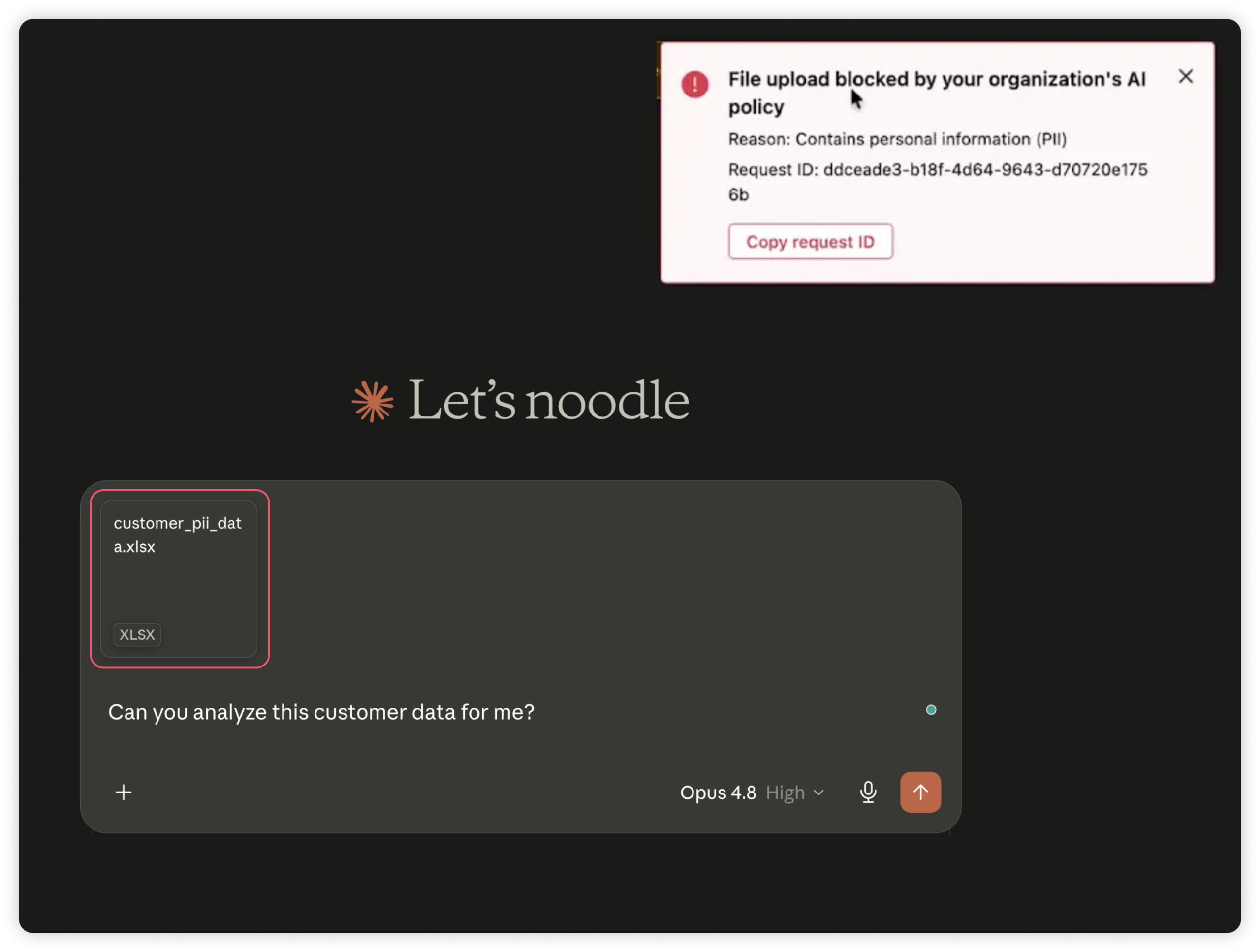

2026 SANS AI Survey Insights
Based on insights from 536 global IT and security professionals and dozens of senior cyber leaders, this report details how organizations are navigating the transition from testing AI to deploying it at scale.
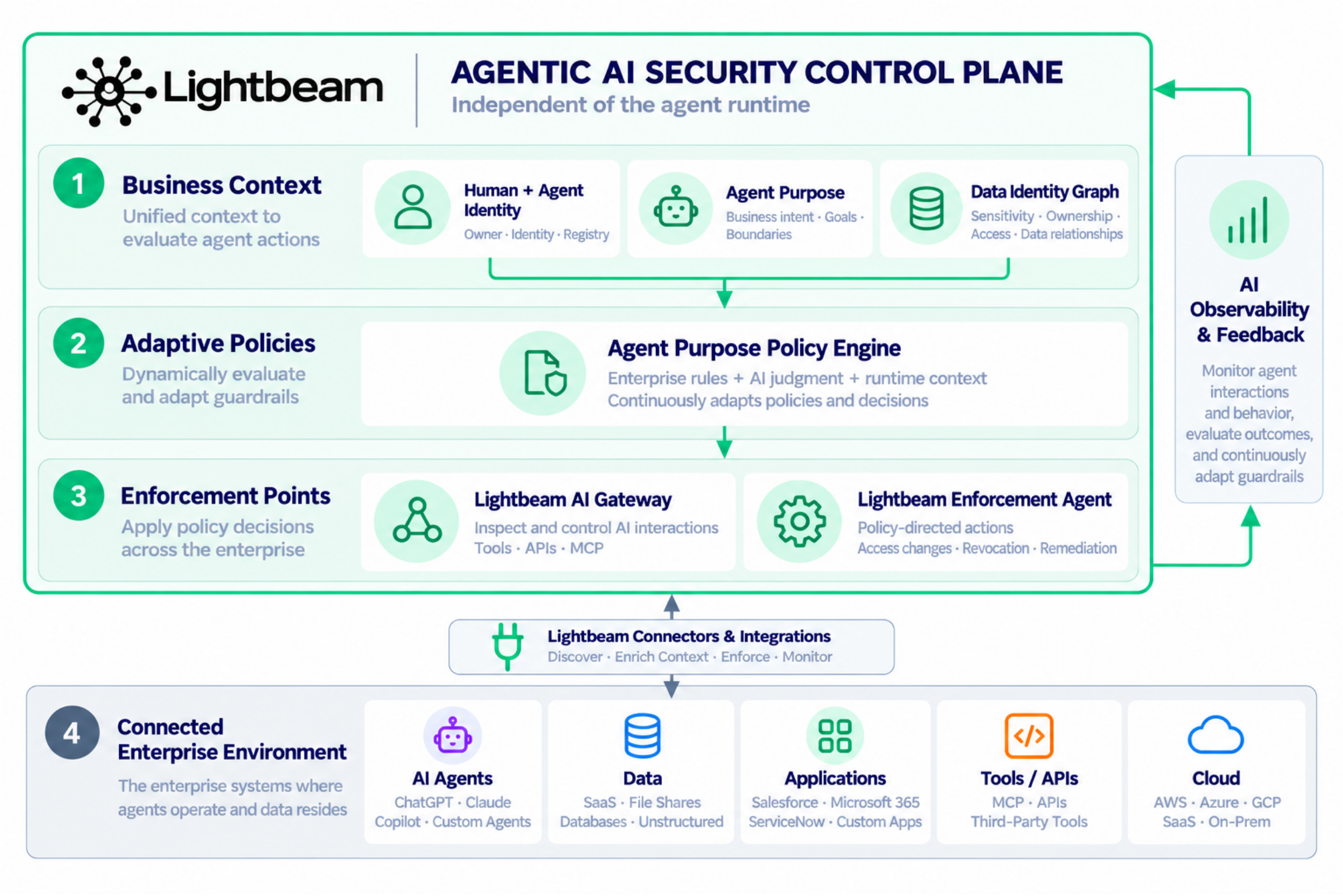
Safely Enable AI Agents With Machine-Speed Controls
Lightbeam understands each agent’s purpose, right-sizes its agency and observes behavior across GenAI tools, copilots and agents. It then applies the right policy action, including allow, redact, require approval or block, all audit-logged.
Extend protection across your data ecosystem

AI Governance
Continuously align agent privileges to the data, applications, APIs, and resources required for intended business purpose.
Learn More
Data Security Posture Management (DSPM)
Discover and classify structured and unstructured data, surface risk, and reduce exposure at scale.
Learn More
Data Classification
Improve classification by using AI to understand data context, not just patterns or keywords.
Learn MoreTrusted by security leaders

“What we want to make sure we’re able to do is protect data from AI use that could cause a security risk. If we want to restrict sensitive data, we need the ability to identify it and put policies in place that don’t allow that AI system to access it, while maybe allowing access to other information that can help automate tasks or analyze data.”

“If a data breach occurred, it could have been a 100,000 dollar issue. Now, using Lightbeam, the cost of potential data breaches becomes zero.”
Common questions about AI Security
Frequently Asked Questions
How does Lightbeam prevent AI agents from accessing sensitive data or taking harmful actions?
Lightbeam combines Agent Purpose with its Data Identity Graph to understand what data agents use, which resources they access, and whether their actions align with intended business purpose. Purpose-aware policies and runtime controls can restrict access, block harmful actions, require approval, or trigger remediation before incidents occur.
Explore AI SecurityWhat is least agency, and how is it different from traditional least privilege?
Least privilege limits what an identity can access. Least agency extends that principle to what an AI agent can perceive, decide, and do. Lightbeam continuously aligns agent access, tools, APIs, and actions with intended business purpose, restricting excessive privileges and enforcing boundaries as tasks and conditions change.
Explore AI GovernanceHow does Lightbeam prevent AI agents from going rogue or acting outside their intended purpose?
Lightbeam evaluates agent behavior against its intended business purpose, enterprise policies, and runtime context. Its Agentic AI Security Control Plane combines adaptive policies with enforcement capabilities to block unauthorized actions, restrict privileges, require human approval, or remediate risk. This helps prevent harmful decisions from becoming security incidents.
Explore the Lightbeam PlatformCan Lightbeam secure GenAI tools like ChatGPT and Copilot and prevent Shadow AI data exposure?
Yes. Lightbeam monitors GenAI interactions, including prompts, responses, files, and attachments across ChatGPT, Copilot, Claude, Gemini, and other AI tools. It detects sensitive data exposure, identifies unsanctioned AI use, and applies policies to block, redact, or audit risky interactions while enabling employees to use approved AI securely.
Explore AI Data SecurityBrowse Key Resources

Press
Lightbeam Delivers the AI Data Control Layer Enterprises Need to Adopt AI Safely
LAS VEGAS, Nev., Black Hat USA, August 4, 2026 – Lightbeam, the AI Data Security...

Ready to secure AI?
Discover how Lightbeam protects your sensitive data from emerging AI threats.